Growing Up at Bellwether
Two boys, one cabin, and a world that had already decided what each of them was worth.
Introduction
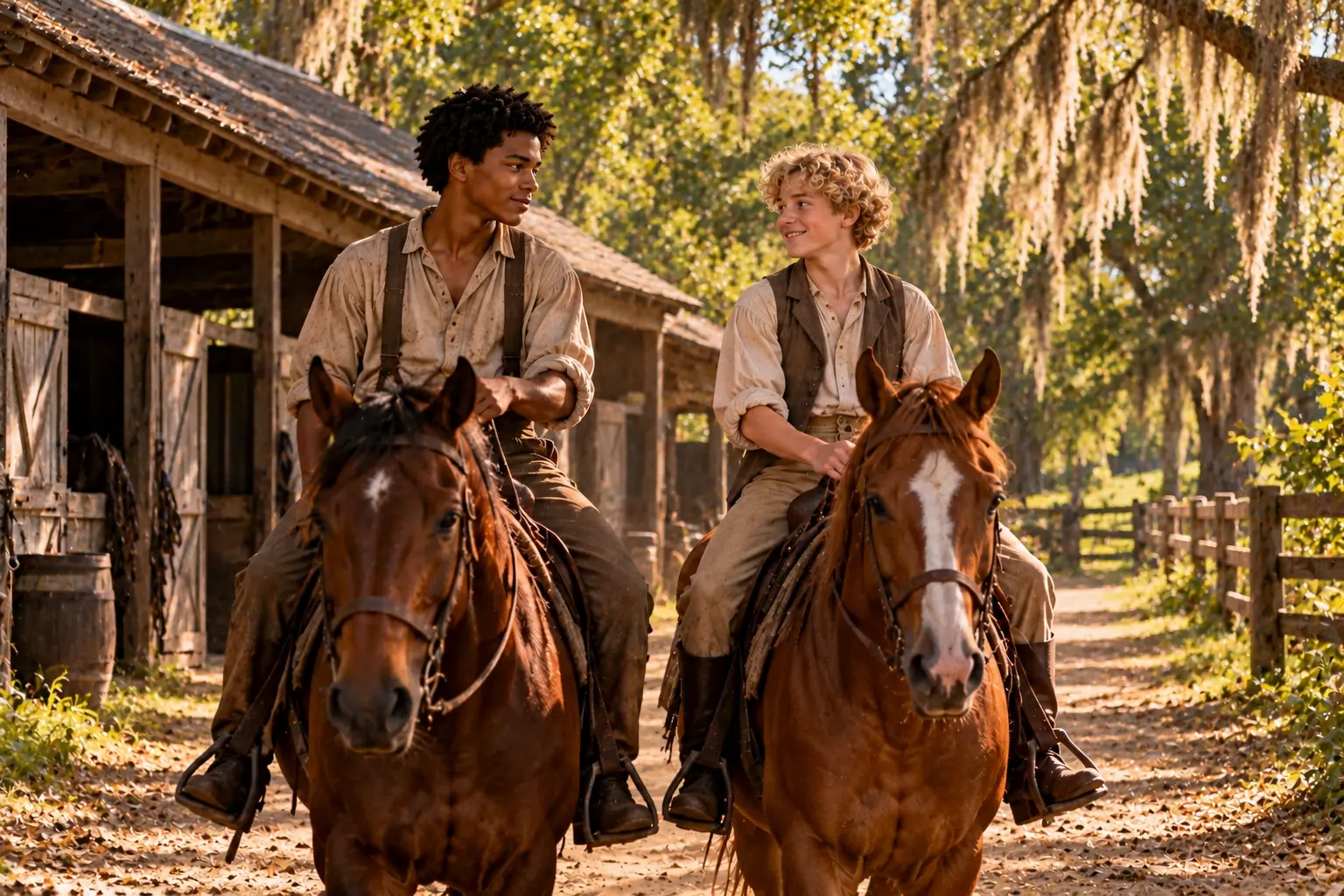
Isaac and Liam were raised side by side. They slept in the same bed, ate at the same table in Lily’s cabin, and spent their summers in the same creek. For a long time, they were simply two boys.
But one was the son of the man who owned Bellwether. The other was born enslaved there. Everything they shared—every game, every lesson, every afternoon in the woods—happened inside that fact, whether they knew it or not.
On Free Ground begins in their childhood, and much of the heart of the book lives there.
How It Began
On a night in 1839, William Gatlin carried his sleeping four-year-old son across the yard to Lily’s cabin door. His wife, Sarah, had died in childbirth, and the baby with her. He asked Lily—the household’s mainstay and the woman who ran nearly everything at Bellwether—to raise the boy.
Lily already had a son of her own. Isaac was six. That night she kept watch over both children asleep in one bed, a dark head and a fair one on the same pillow.
From then on, Lily raised them together.
The World They Grew Up In
Bellwether is a tobacco plantation in New Hanover County, in North Carolina’s Cape Fear country—pine woods, low fields, creeks running brown-gold over gravel, and the port of Wilmington a wagon ride away. There is the big house, the yard, the smokehouse, the tobacco fields, and the quarter where the enslaved people of Bellwether live.
For Liam, it is home: a place with nowhere he has to be. For Isaac, it is home too—but it is also a place where someone is always watching, where a pass must be carried, and where a boy learns early to keep his eyes down and his feelings to himself.
“…with the whole floor solid under him and no idea in the world how lucky that was.”

The Places They Shared
Much of the boys’ childhood happens outdoors, in the few places where the rules of the house seem to loosen.
The creek.
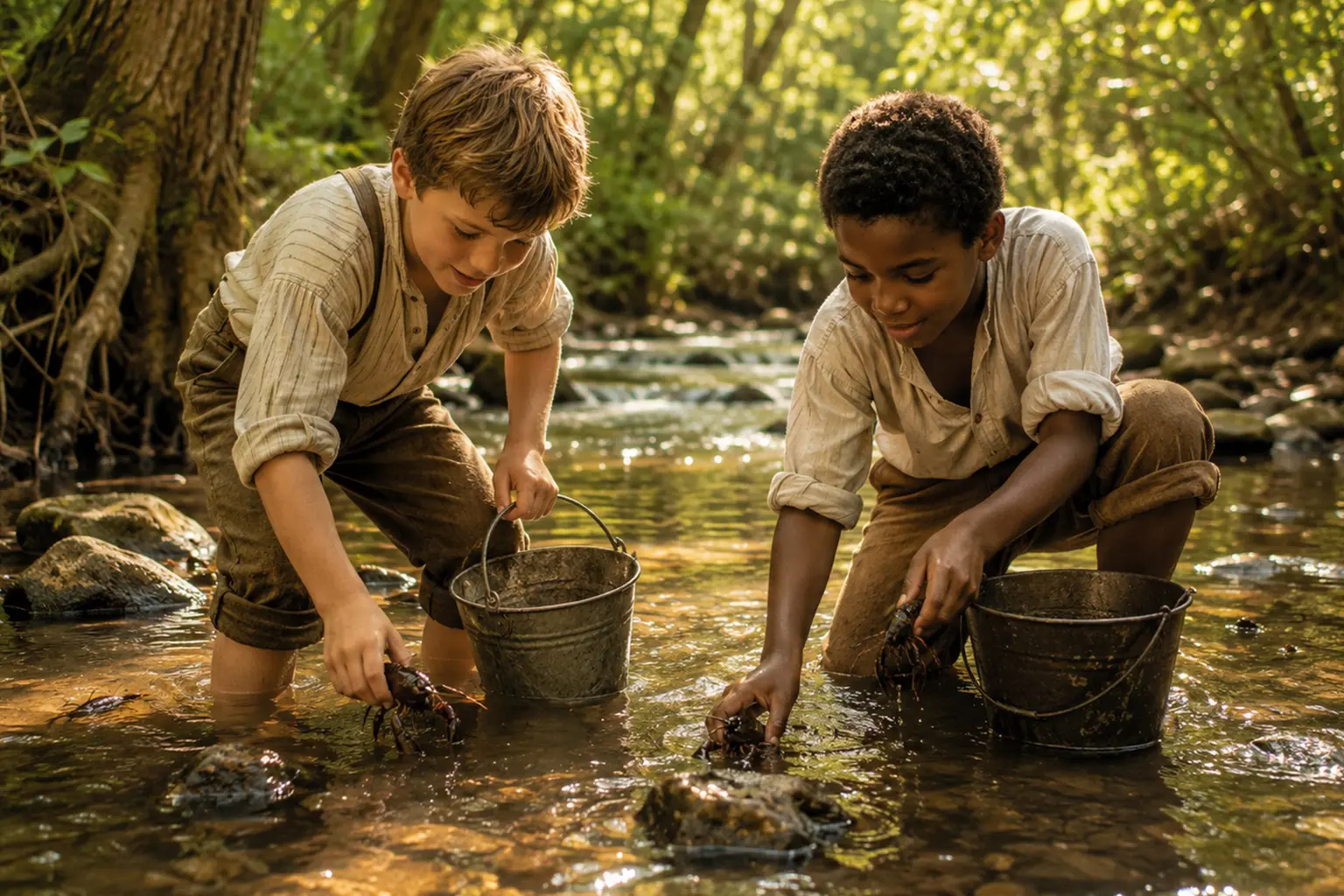
Hunting crawdads under the flat rocks in the shade of the beeches. In the water, Isaac is the one who knows how, and Liam is the one who follows—the order of the world turned over, if only for an afternoon.
“The creek only knew who could find the crawdads, and that was Isaac.”
Behind the smokehouse.
A marble ring scratched in hard-packed dirt, and a banded English agate that comes to mean far more than a game. The boys work out a way for it to belong to Isaac without anyone ever saying so out loud.
“It was the first thing Isaac ever owned.”
The swimming hole.
Long summer afternoons of fishing and swimming in a deep bend under a sycamore—the brightest days of their boyhood, as Liam sees them. What Liam doesn’t see is how much Isaac is quietly watching for.
The woods and the ridge.
Squirrel hunting in the beech grove, gathering chestnuts in the first cold of autumn, wandering the pawpaw bottoms. Not every day in the woods is safe, and more than once one boy has to be the other’s rescue.
The Schoolroom
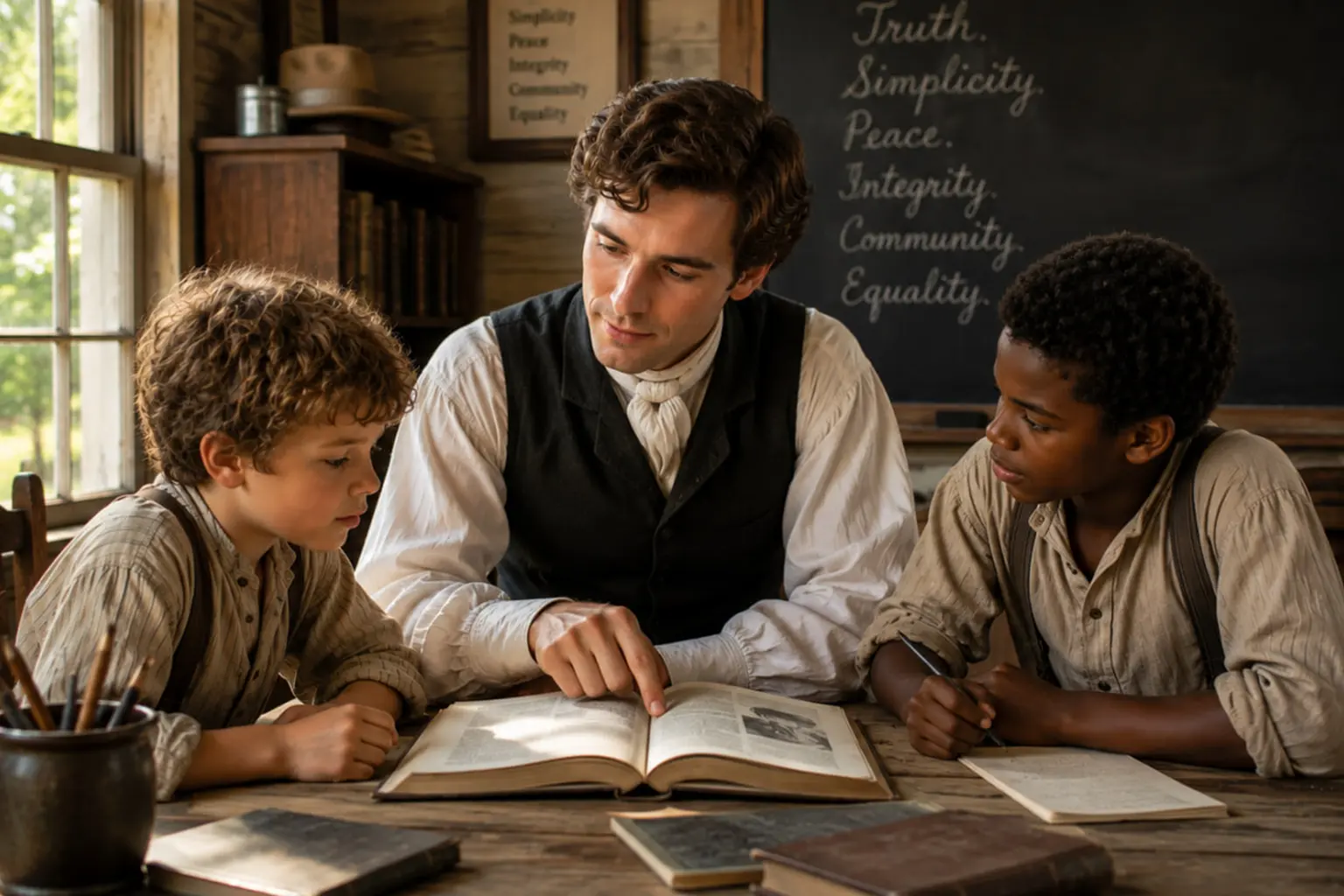
When Isaac is eight, a young Quaker tutor named Thomas Shackelford arrives to teach Liam. Isaac carries the books upstairs, sees print for the first time, and can’t stop wanting to know what the marks say.
Sitting in the corner of the schoolroom, he begins to learn—quietly, and faster than the boy the lessons are meant for.
That was dangerous. Under North Carolina’s 1830 law against teaching enslaved people to read or write, a white person who did it could be fined or jailed, and an enslaved person could be whipped. Thomas knows the risk. So does Lily, once she finds out. Her rule for her son is simple: never let anyone see.
Reading becomes the first secret Isaac keeps for himself—and the first real freedom he has.
Two Childhoods in One
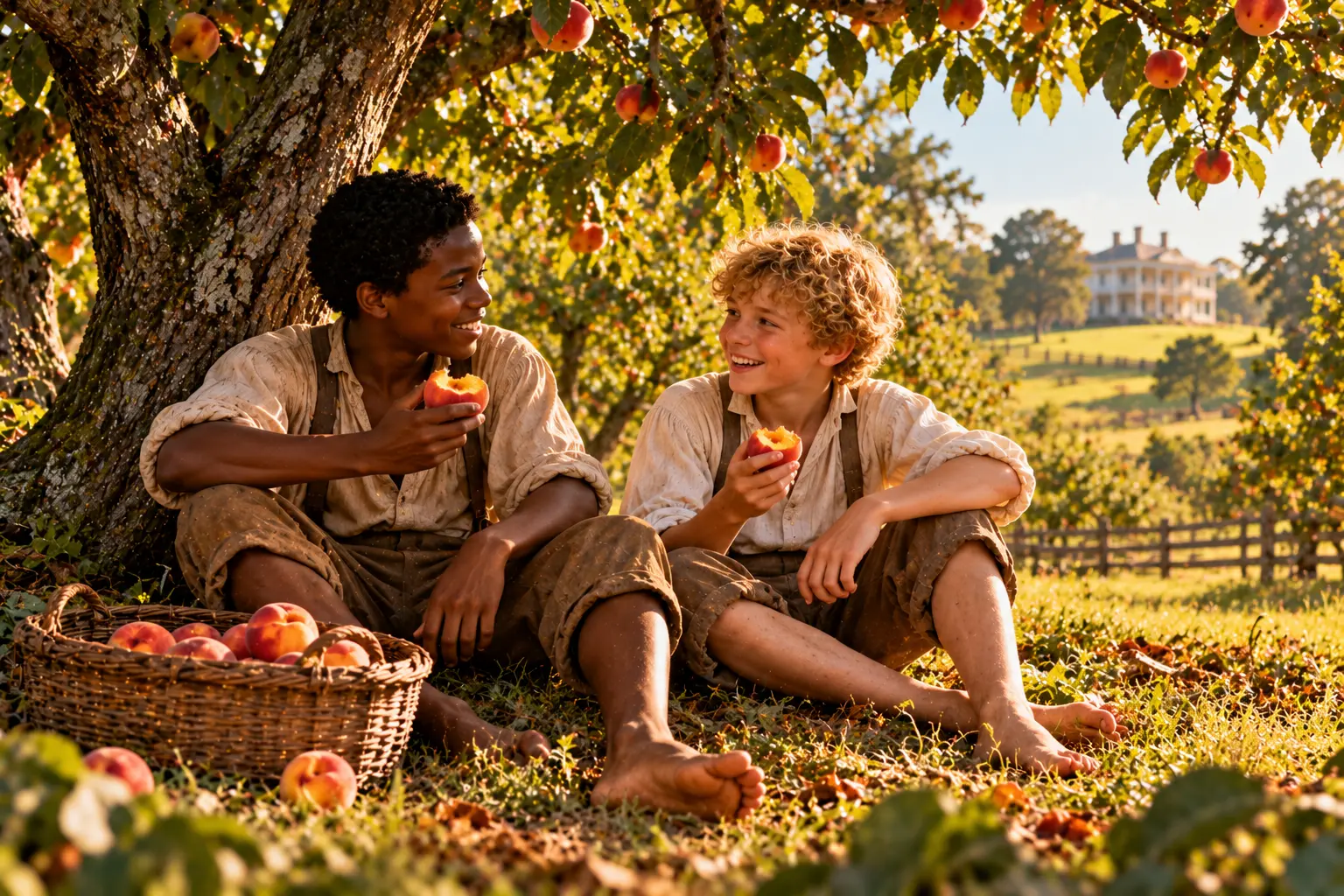
The boys share nearly everything, but they are not living the same childhood.
Liam is open-faced and quick to laugh, slow at his books, and fearless in the way of a boy who has never had to be afraid. Isaac is the still one: watchful, careful, a step ahead, always measuring what is safe to say and do. Liam can forget a close call by suppertime. Isaac can’t afford to forget anything.
As the years pass, Liam slowly begins to notice the things Isaac carries—some of them in his shirt pocket, most of them where no one can see. And Isaac, more than anyone, sees exactly how wide the gap is between them, even when they are closest.
Lily, at the Center
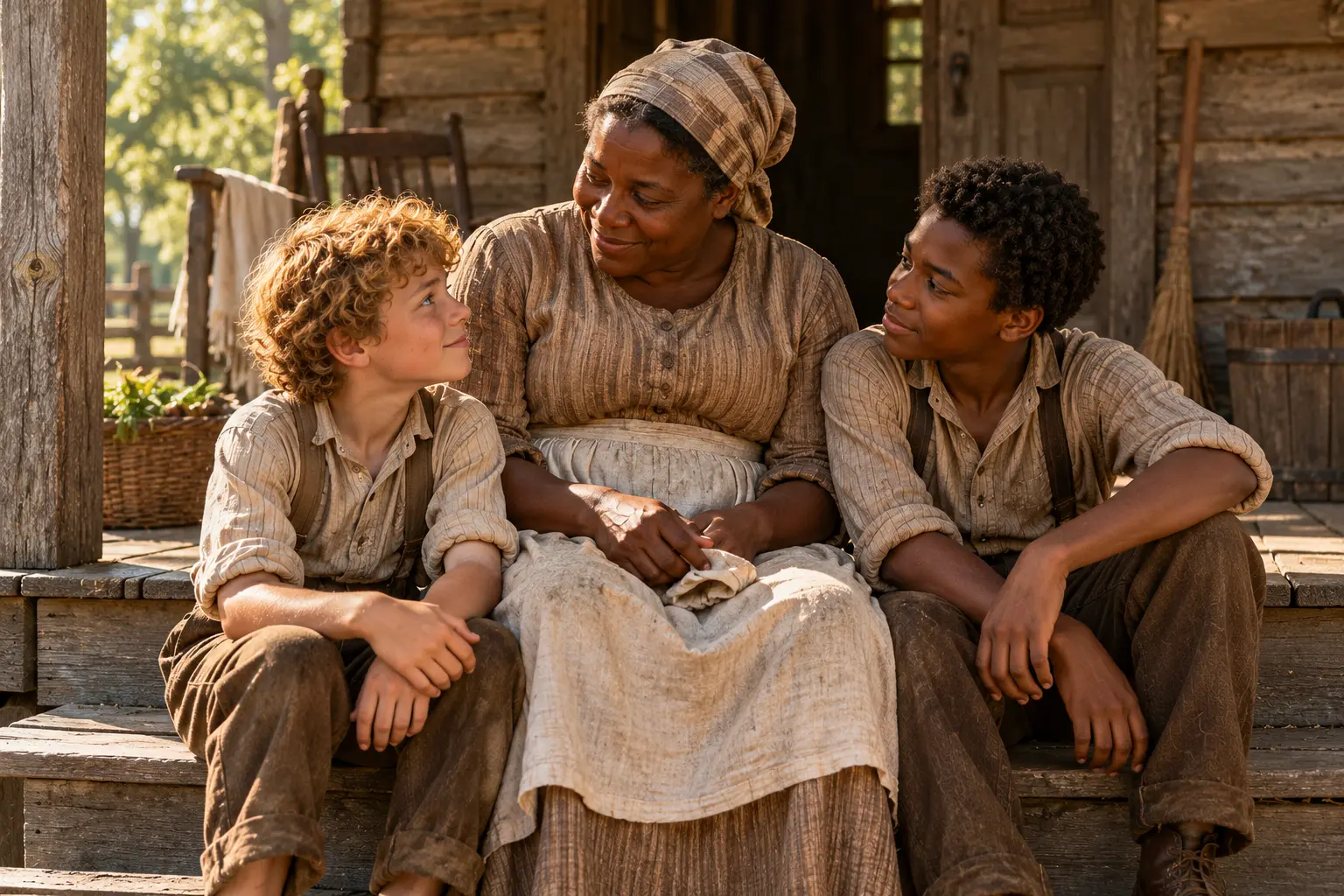
Lily is mother to one boy by birth and to the other by a dying woman’s need. She feeds them, scolds them, patches their clothes, and loves them both. She also knows, better than anyone, what the world has planned for her son as he grows into a man—and she spends his childhood quietly preparing him for it.
If the boys are the heart of the early chapters, Lily is the ground they stand on.
Something Neither Could Name
Somewhere in those years—at the creek, by a fire on the chestnut ridge, in the dark of the cabin—the friendship begins to become something more. Neither boy has a word for it yet. In their world, it is the most dangerous thing they could feel.
What happens next is the story of On Free Ground.
The Boyhood Years at a Glance
Year | Isaac | Liam | What’s happening |
1839 | 6 | 4 | Liam comes to Lily’s cabin to be raised alongside Isaac |
1841 | 8 | 6 | Thomas Shackelford arrives as Liam’s tutor |
1843 | 10 | 8 | Isaac is secretly learning to read; summer at the creek |
1845 | 12 | 10 | A summer of swimming—and of real danger |
1846–47 | 13–14 | 11–12 | Chestnut season on the ridge; the bond deepens |