Underground Railroad
Isaac, a church on Temple Street, and the people who moved freedom seekers north by night.
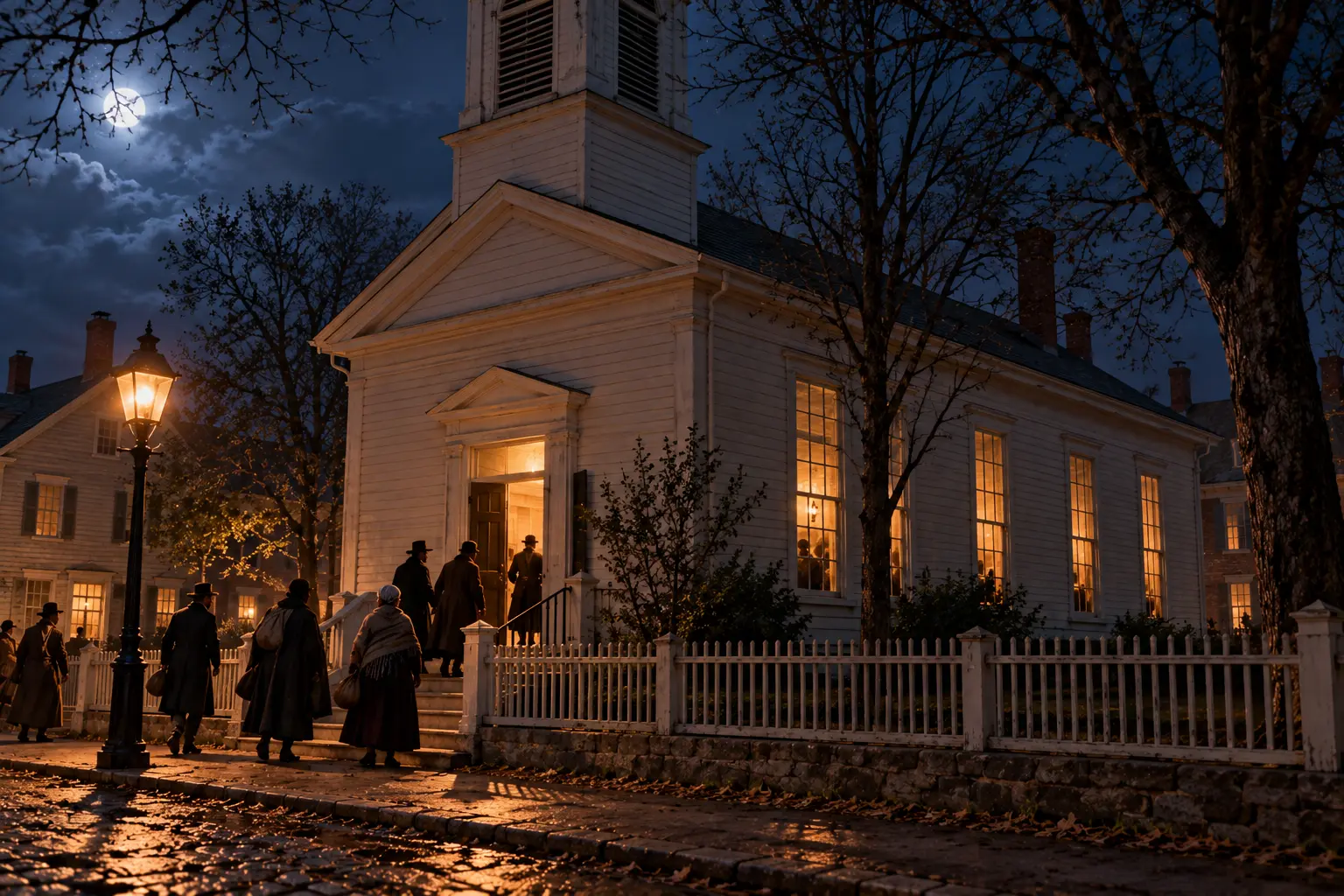
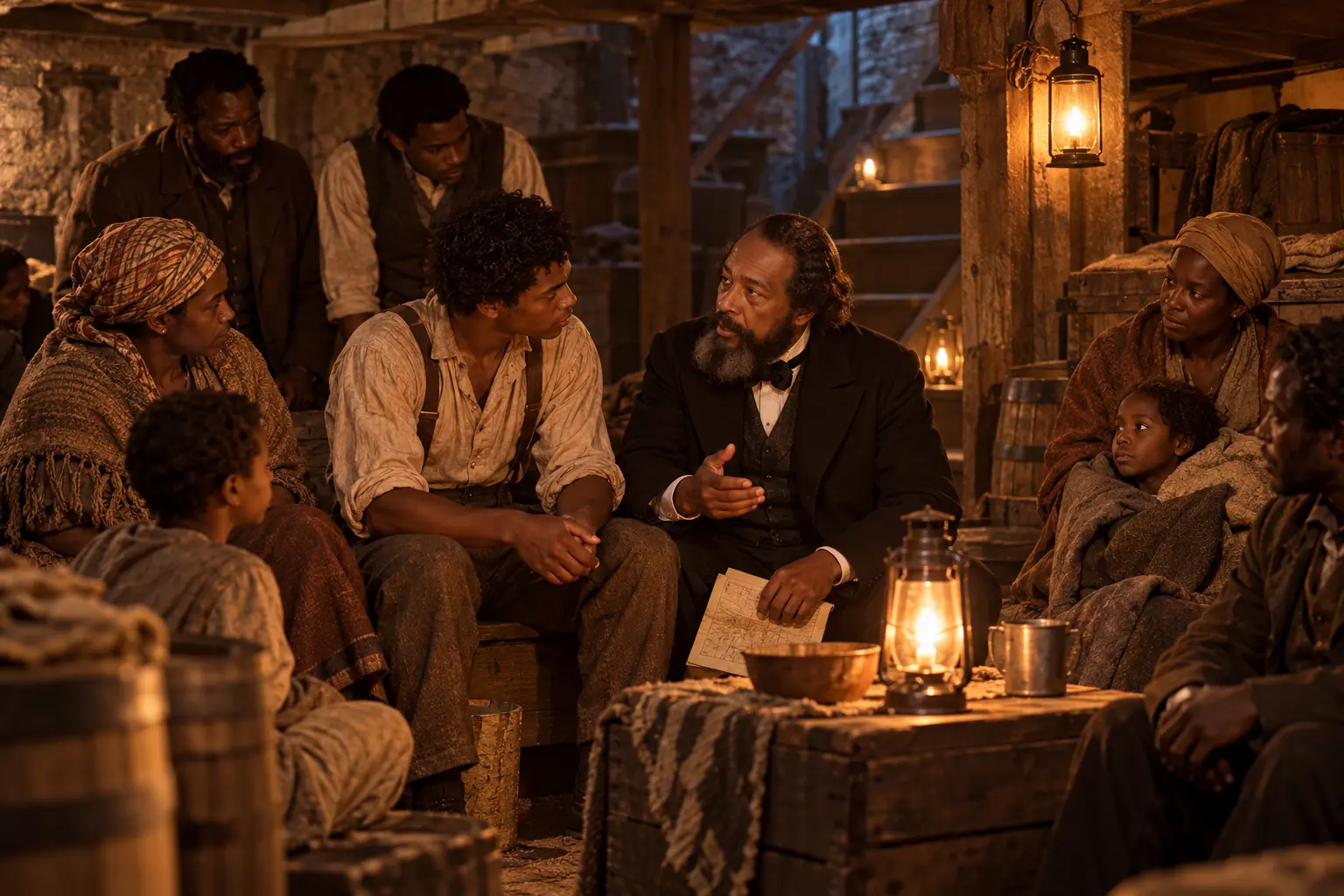
By day, Isaac keeps two rented rooms in New Haven and sees to the needs of a young law student from Carolina. Some nights he goes out after dark in an old coat and doesn’t say where. He goes to a cellar under a church on Temple Street, where people who have escaped slavery wait for a wagon to carry them farther north.
In the cellar he isn’t anyone’s servant. He is the one who can read a frightened room in a single look, because he has spent his whole life doing it.
The Cellar
In On Free Ground, the work is quiet, unglamorous, and dangerous. A woman sleeps sitting up. A girl of fifteen watches Isaac for hours, trying to decide what he is. A carter named Josiah hides people under a load of barrel staves and says he’s bound for Meriden. Near midnight, a boy of nine asks Isaac a question he can’t answer honestly.
“How far is it to where they can’t get you.”
Isaac tells him “not far now,” and the boy goes to sleep. The question stays with Isaac for years.
The Hard Truth
Elias Cuffee, a free-born caulker and church member, has been in the work for years. He doesn’t trust Isaac, and he has a reason that has nothing to do with Isaac himself.
Isaac lives in a free state, but by law he is still the property of a man in North Carolina. If he is ever caught, the people around him are exposed too. One letter to the South could open every door on Temple Street to a man with a warrant. Elias puts it bluntly:
“Get your paper.”
What Isaac does with that challenge is part of the story the book tells.
The Real Church on Temple Street
The church in the novel is real. In 1820, twenty-four free Black New Haveners and a white minister and reformer, Simeon Jocelyn, founded a congregation that first met on Temple Street. It is still active today as the Dixwell Avenue Congregational United Church of Christ, recognized as the oldest African American Congregational church in the world.
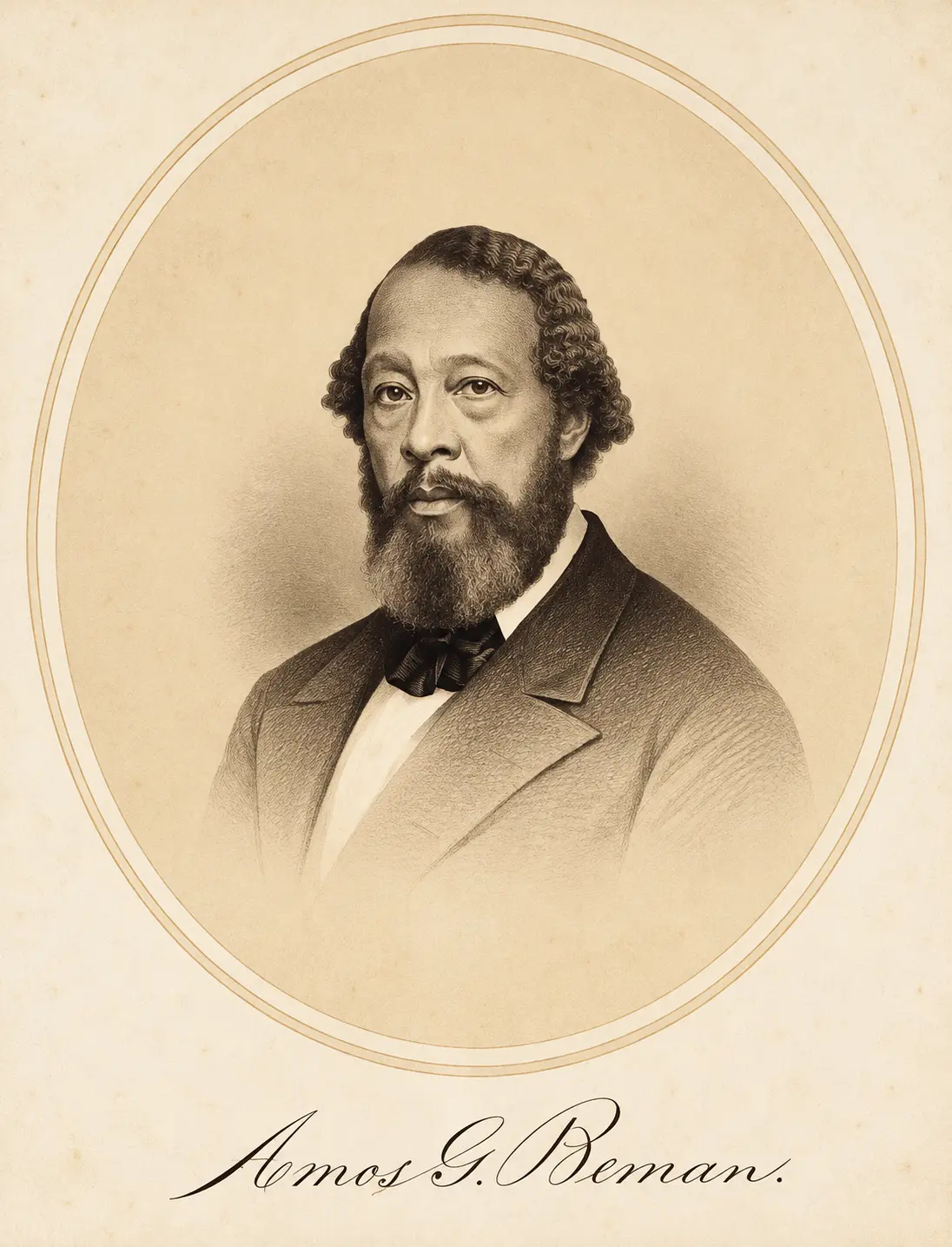
In 1841 the Reverend Amos Gerry Beman became its pastor. He was the son of a Middletown minister and had once been driven away from Wesleyan University by students who threatened violence if he kept attending classes. Over seventeen years at Temple Street, Beman grew the congregation by more than a hundred members, often worked without pay, and became a national voice for abolition, education, temperance, and the rights of Black citizens. He and his congregation also supported the African captives of the Amistad when they were held in New Haven, and the church and its members were part of the Underground Railroad.
Why New Haven
New Haven was one of the main entry points for the Underground Railroad in Connecticut. Many freedom seekers reached the state by water, arriving in the harbor on ships from southern ports. From New Haven, the main route ran inland toward Middletown, Hartford, and Farmington, the town often called the “Grand Central Station” of the Connecticut network. From there, travelers went on to Massachusetts, Vermont, and Canada.
The work depended on free Black communities, white abolitionists, and Native Americans working together. Most of it was never written down. Helping someone escape was a federal crime, so the people who did it kept no records, and much of what we know comes from family stories handed down for generations.
The Law In 1854
The Fugitive Slave Act of 1850 made the danger worse than it had ever been. It required citizens in free states to assist in capturing people accused of escaping, denied the accused the right to testify at their own hearings, and paid federal commissioners more for sending a person south than for setting him free.
Connecticut pushed back. In 1854, the year of these chapters, the state passed a personal liberty law that set severe penalties, including heavy fines and years in the state prison, for kidnapping a free person into slavery or testifying falsely that someone was a slave. It made Connecticut safer for free Black residents. It could not protect someone who was, on paper, still legally owned.
Fact and Fiction
Isaac, Elias Cuffee, Josiah the carter, and the people in the cellar are invented. So is the cellar itself: no record shows how the Temple Street church sheltered freedom seekers or where. The history around them is real:
- The Temple Street church was founded in 1820 by free Black New Haveners with Simeon Jocelyn and continues today as the Dixwell Avenue Congregational United Church of Christ.
- Rev. Amos G. Beman (pictured) was its pastor from 1841, a leading Black abolitionist and reformer, and an Underground Railroad participant.
- New Haven harbor was a major entry point for freedom seekers coming into Connecticut, many of them by ship.
- Farmington was the best-known hub of the Connecticut network.
- The Fugitive Slave Act of 1850 paid commissioners $10 for returning a person to slavery and $5 for a release, and barred the accused from testifying.
- Connecticut’s 1854 personal liberty law imposed severe penalties for kidnapping free people into slavery and for false testimony that someone was enslaved.
- William Grimes, who escaped slavery and published his story in 1825, is buried in New Haven’s Grove Street Cemetery. The National Park Service recognizes his grave as part of its Underground Railroad Network to Freedom.