Explore the History: Bellwether
A Fictional History of Bellwether
The plantation at the heart of On Free Ground, is on a creek of the Cape Fear in New Hanover County, North Carolina.
There are two records of Bellwether, and they do not agree.
The first is the ledger in the office. It begins in 1800, in the elder Gatlin’s big careless hand. Every January since, on the first page of the year, a Gatlin has written down how many people are on the place. In the years of the novel the number is sixty-one. It goes up and down.
The second record lies in the pines beyond the lower field, on a low sandy rise where the longleaf stand thin, and nobody wrote it. It is the burying ground. It has no stones. It has mounds, and on the mounds the things people leave: a cracked pitcher, a medicine bottle, a plate turned face down, oyster shells. Some of the mounds have a cedar at the head, and some of the cedars are very old. The oldest graves there were dug sixty years before any Gatlin owned an acre of the county.
In the ledger, the place belongs to the Gatlins. In the pines, it belongs to the people in the ground. This is the story of how both came to be true.

The Creek
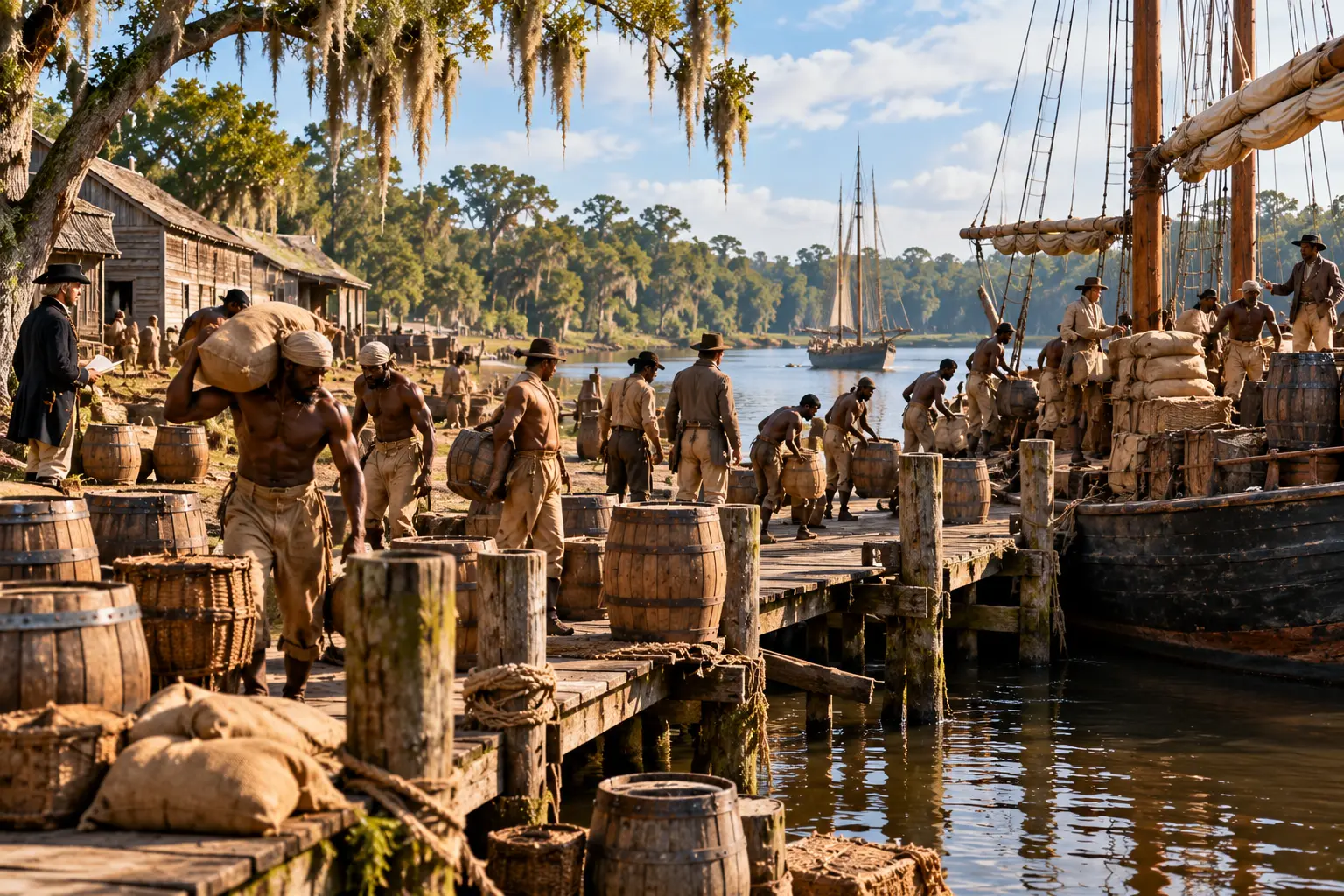
The land lies along a creek that runs south and west through the pine flats until it finds the Cape Fear River, and the Cape Fear runs down to Wilmington. Everything that ever left the place left by that road.
The creek has had many names. Whatever the first people called it is lost. They were the people the English called the Cape Fear Indians, and by the 1720s they were nearly gone from the river, driven out by war and by Carolina slave raiders who took Native people out of that country in chains long before anyone brought Africans in. They left oyster-shell middens at the creek mouth, gray mounds taller than a man, and broken pottery with cord marks on it that children on the place still turn up in the low field after a hard rain.
The Pells called it Pell’s Creek. The Gatlins call it simply the creek. Below the house, where the tide reaches up from the river and the water goes wide and brown and slow between the marsh grass, everybody on the place calls it the river, though it isn’t. From the front gallery on a clear morning, it shines through the oaks like one.
The quarter has its own name for that lower reach. It calls it the Long Water. Nobody can say who named it that, or when, and nobody white has ever heard it said.
The Pells, 1735–1799
The land was first patented in 1735 by Josiah Pell of Goose Creek, South Carolina. He was one of the many Carolina planters who moved north into the lower Cape Fear in those years with their families, their money, and the people they owned, and divided the country among themselves in large grants. Pell took two thousand acres on the creek. He never meant to farm it. It was longleaf country, the pines standing tall and open on white sand with wiregrass beneath them, and the pines were the crop.
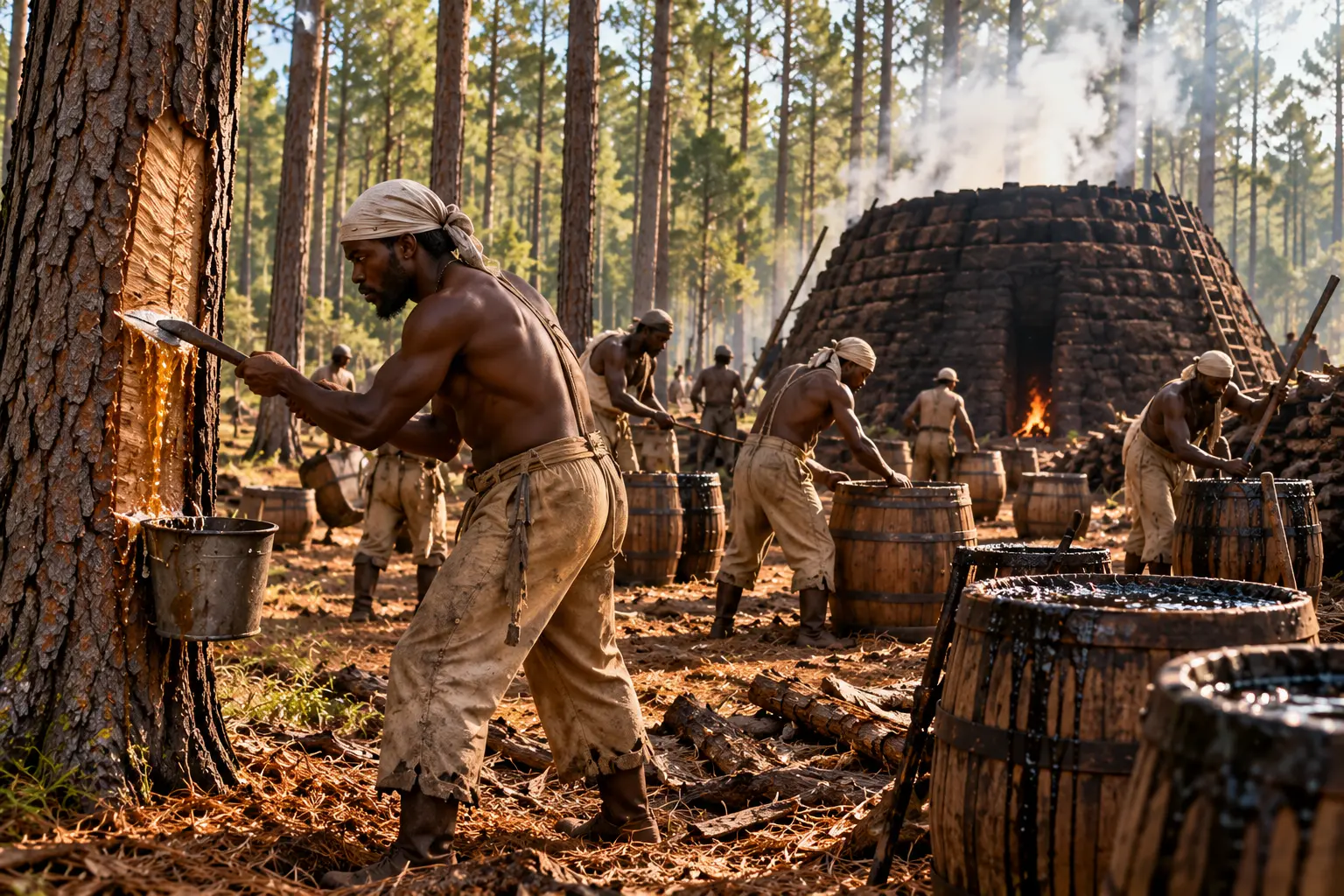
The Pells made tar, pitch, and turpentine, first for the Royal Navy and later for anyone who would pay. The enslaved people Pell brought up from Goose Creek did the work. They cut boxes into the living pines and collected the gum. They stacked resin-rich lightwood in earth-covered kilns and burned it slowly until the tar ran. They hauled the barrels down to a landing on the creek and loaded them onto flatboats for Wilmington. That landing still stands as the old dock below the swimming hole, under the sycamore. The pilings the boys swim from are Pell pilings, two lifetimes old.
The first person buried in the pines was laid there around 1740. No one knows her name. The quarter says she was a woman from across the water who came up from Goose Creek with the first work gang and died that first winter, and that the people who buried her set her cup on her grave so she would have it. That, they say, is how the custom began there.
In 1781 the British army under Major James Craig occupied Wilmington and held it for most of a year. Word traveled up every creek and river on the Cape Fear that any enslaved person who reached the British lines would be made free. That spring, eleven people walked away from Pell’s Creek at night, down the river road toward town. Pell never got them back. When the British sailed out of Wilmington in November, some of the eleven sailed with them. For a long time the quarter kept their names. Later, as these things go, it kept only the number.
Eleven. It was the first time anyone had left that place for freedom, and the place remembered it the way a field remembers a flood.
The Pells did poorly after the war. Their pines had been tapped again and again until the trees were scarred to the heart and dying on their feet, and the sons lacked the father’s head for business. They sold half the grant in the 1780s and borrowed against the rest. In 1799 the sheriff of New Hanover County sold what remained on the courthouse steps in Wilmington to settle a debt: eleven hundred acres on Pell’s Creek, a decaying frame house, a landing, a corn mill, a stand of worn-out pines, a flock of sheep, and fourteen people.
The Gatlins, 1799–1832
The buyer was thirty years old, the second son of a Norfolk merchant house that had shipped Virginia tobacco to Liverpool for two generations. He had grown up on the Norfolk wharves among tobacco barrels and account books, and he knew tobacco the way a merchant knows it: by its price. He had never grown a plant of it. His elder brother would inherit the family firm, so he came down the coast looking for land of his own, with money from his father and a great deal of confidence. He found the Pell tract going cheap and bought it, people and all.
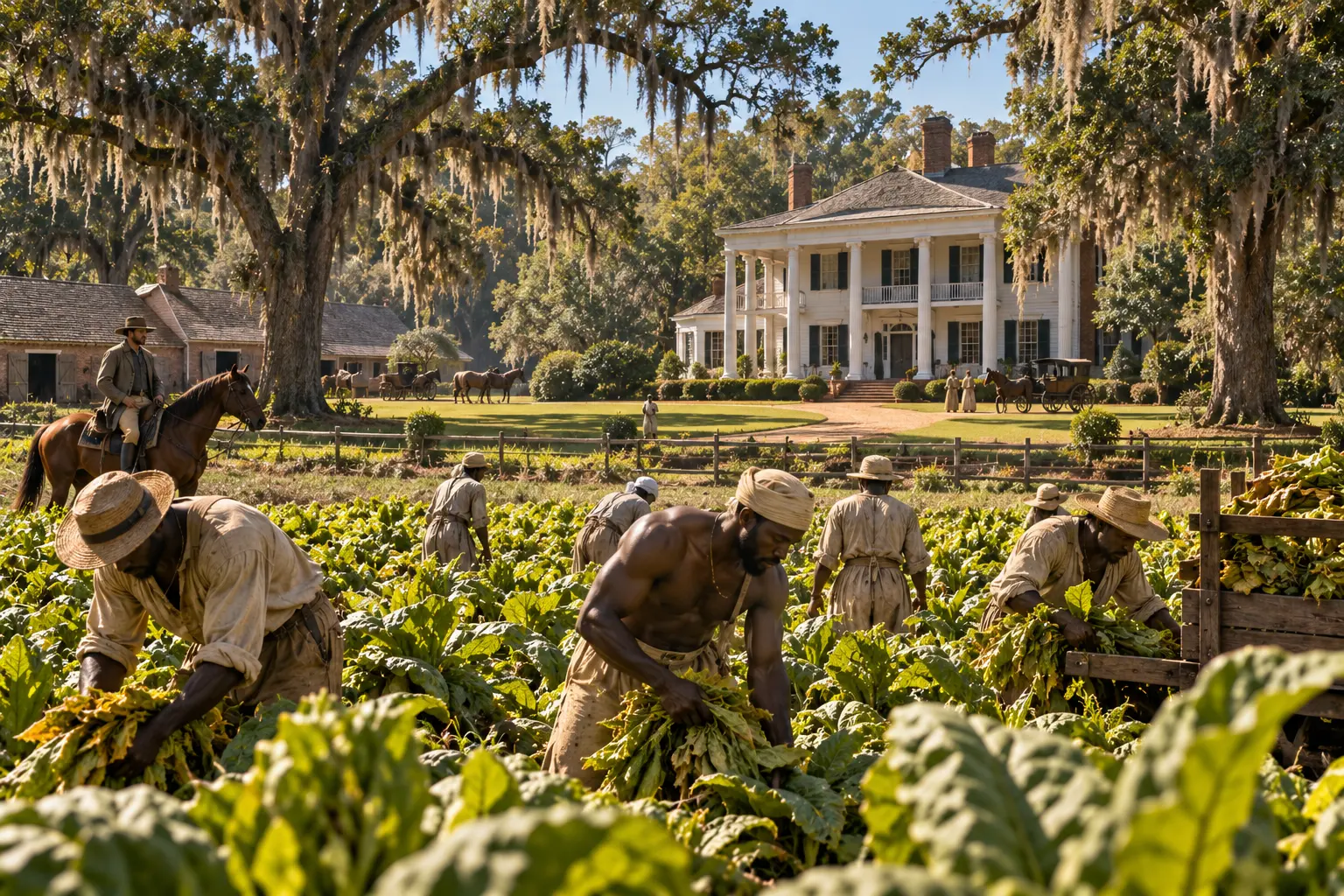
He pulled down the Pell house and in 1802 built a new one on the rise above the creek: a plain two-story frame house facing south over the water, with a gallery across the front and the kitchen standing separate behind it, as kitchens did, for fear of fire. He had the men he had bought plant a double row of live oaks down the lane from the river road, a hundred and twenty saplings set out that winter and watered by hand through two dry summers. By the time his grandson was born, their branches met over the lane.
And he renamed the place.
He called it Bellwether. He told anyone who asked, and some who didn’t, that it was because where a Gatlin went, the county would follow. He laughed when he said it, and he meant every word.
The name came from the Pell flock, which he kept: forty-odd sheep on the cleared ground near the house, tended by an old woman named Juno who had been born on Pell’s Creek before the Revolution and remembered the British. At the head of her flock walked a belled wether, the way it always had.
It was Juno who told the quarter what the name meant. She told it to the children on the cabin steps, and they told their children.
A bellwether, Juno said, is a ram they cut when he’s young, so he’ll be gentle. Then they hang a bell on him, and the sheep follow the bell. They follow him to the shearing. They follow him into the pen. They follow him down to the butcher’s, and he walks in front the whole way, ringing, and don’t none of them ever think to ask him where he’s going.
The flock lasted until 1830, when it was sold off to a drover from Duplin County. That was the last wool at Bellwether. Lily, who had carded it in the house for twenty years, kept the comb on its nail anyway.
William's Bellwether, 1832–1855
William kept the place as his father had made it and changed nothing that mattered. He married in 1834 and was widowed in 1839, and after that he was more often at sea than at home. In practice Bellwether was run by its overseers: first Barlow, who drank, and then, from 1839, Samuel MacKinne, who did not.
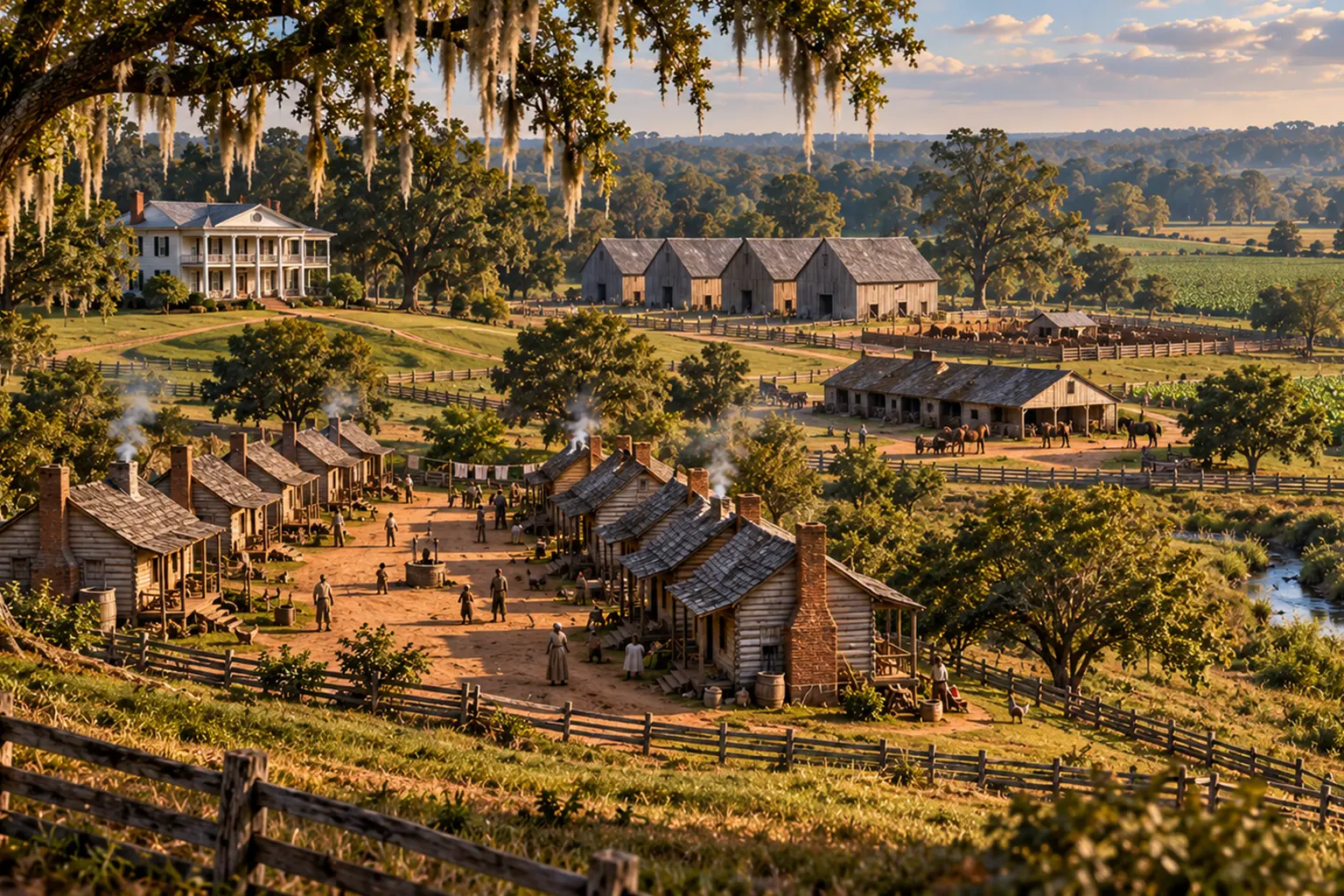
From the river road, the place looked in those years the way such places are meant to look. The lane ran a quarter mile under the oaks to the white house on its rise, with the gallery across the front, the east wing on the right, and the water showing silver behind. Behind the house stood the brick kitchen, the smokehouse, the office, the dairy, and the well.
Beyond them, down the slope toward the low field, ran the quarter: two rows of board cabins facing each other across a swept dirt yard, each about twelve feet by fourteen, each with a chimney of clay and sticks at one end. Lily’s cabin stood at the head of the near row, by the ash tree, closest to the house. The overseer’s house stood at the head of the quarter, where it could see down the whole length of it.
Past the quarter were the stables and the barnyard, and past them the curing barns, tall and windowless. The tobacco ran in long fields along the creek: the upper field, the long field below the house where the first plants were set out in 1811, and the low field by the water. The corn mill stood on the creek below the lower lot. Below the mill were the old Pell landing and the swimming hole under the sycamore, and downstream of those the pawpaw bottoms, thick and green and close. Above them on the ridge stood the great chestnut and the beech grove where the squirrels were. Beyond everything, on every side, were the pines: the old longleaf, still scarred with Pell turpentine boxes eighty years old, standing over the white sand, the wiregrass, and the burying ground.
The ground was wearing out. Tobacco is a hungry crop, and the sandy Cape Fear soil had little to give it in the first place. By 1850 the long field that had been the family’s pride was yielding about half of what it once had, and the low field was worse. Sixty-one people lived on the place in the years of the novel. There had been as many as seventy-four in 1836, and as few as fifty-three after the debt sales of 1832.
What the Place Is
The elder Gatlin believed he had bought Bellwether. He had a deed from the sheriff of New Hanover County that said so, the deed was recorded, and in the eyes of every court in North Carolina it was true.
But the place was older than his deed. The people who made it had cleared it, boxed its pines and burned its tar, built its landing, raised his house and planted his oaks, set out his tobacco, put out his fire, and buried their dead in his pines for more than a century. They had been on that ground before him, and they had not gone anywhere. Some of the fourteen people he bought on the courthouse steps were the great-great-grandchildren of the woman with the cup. By 1855 the Gatlins had held the land for fifty-six years. The people in the pines had been on it for a hundred and fifteen.
No one at Bellwether ever said this aloud. There was no use saying it; the law had no way to hear it.
But the quarter knew it, the way it knew everything, and kept it the way it kept everything: down deep, banked like a coal, waiting for a morning when it might be wanted. It was in the name of the Long Water. It was in the number eleven. It was in the cups and plates and oyster shells, and in old Juno’s bell on her grave in the pines. And it was in the plain, unspoken, entirely unprovable certainty, held in every cabin in those two rows, that when the ledger and the burying ground disagreed about whose land this was, the ledger was the one that was lying.
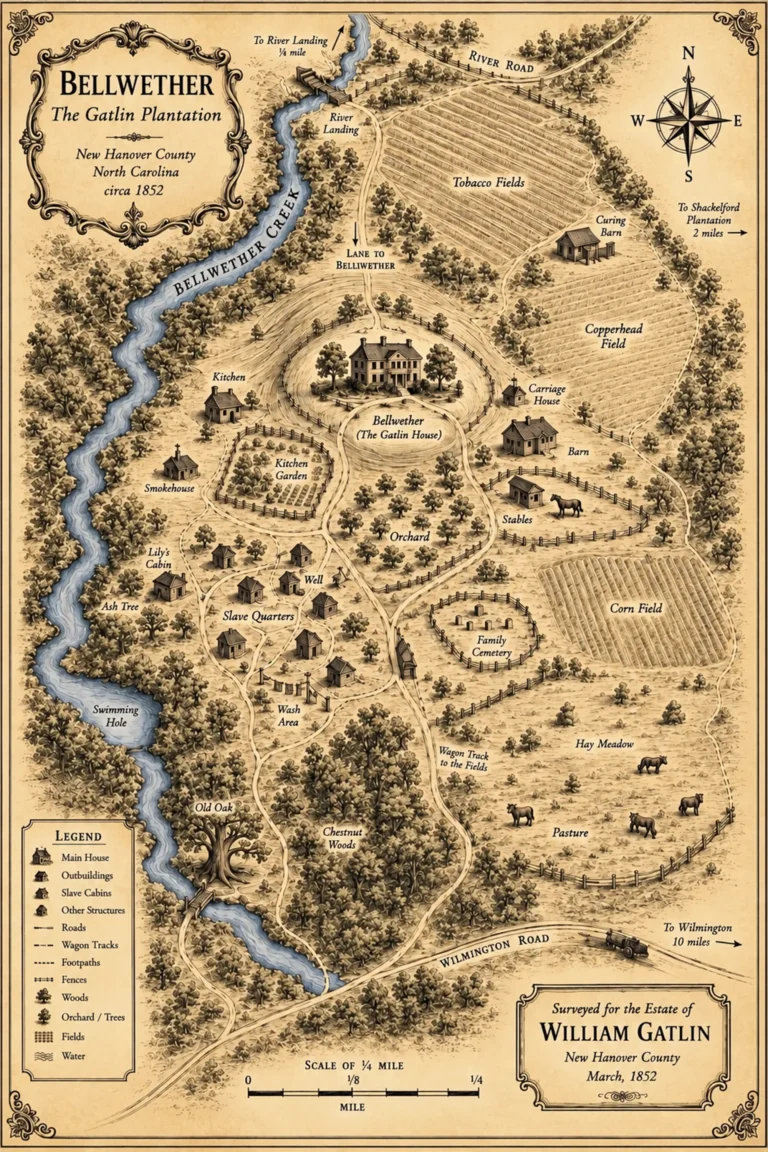
The world of the plantation
A holding the size of Bellwether, with sixty-odd enslaved people, a resident overseer, and a young master sent north to be educated, was an ordinary thing in the North Carolina piedmont and coastal plain in these years, not an extravagant one. The domestic slave trade—the sale of human beings from the worn-out tobacco country of the upper South toward the cotton and sugar frontier of the Deep South—was at its height in exactly this period, and the coffle on the public road, the auction in the county town, and the trader’s coin were the ordinary furniture of the world, not its exceptions. The threat of sale hanging over every attachment in the quarter is not a device of the plot. It was the central fact of the institution, the thing that made all the others enforceable.