Explore the History: Slavery
How Enslaved Africans Came to North Carolina
The history behind On Free Ground
The enslaved people at Bellwether, the fictional plantation at the heart of On Free Ground, were nearly all born in North Carolina. By the 1840s most of them were several generations removed from Africa. One character can trace her family back only as far as an ancestor who “came off a ship,” and does not know the name of the place he came from.
That gap in memory was no accident. It was the result of a long chain of violence and commerce that stretched from the interior of West and West Central Africa to the docks of the Cape Fear. This piece follows that chain: how people were captured in Africa, how they reached North Carolina, and how Native nations in the Carolinas were drawn into the trade in human beings, first as its victims and later, in some cases, as slaveholders themselves.
Captured in Africa
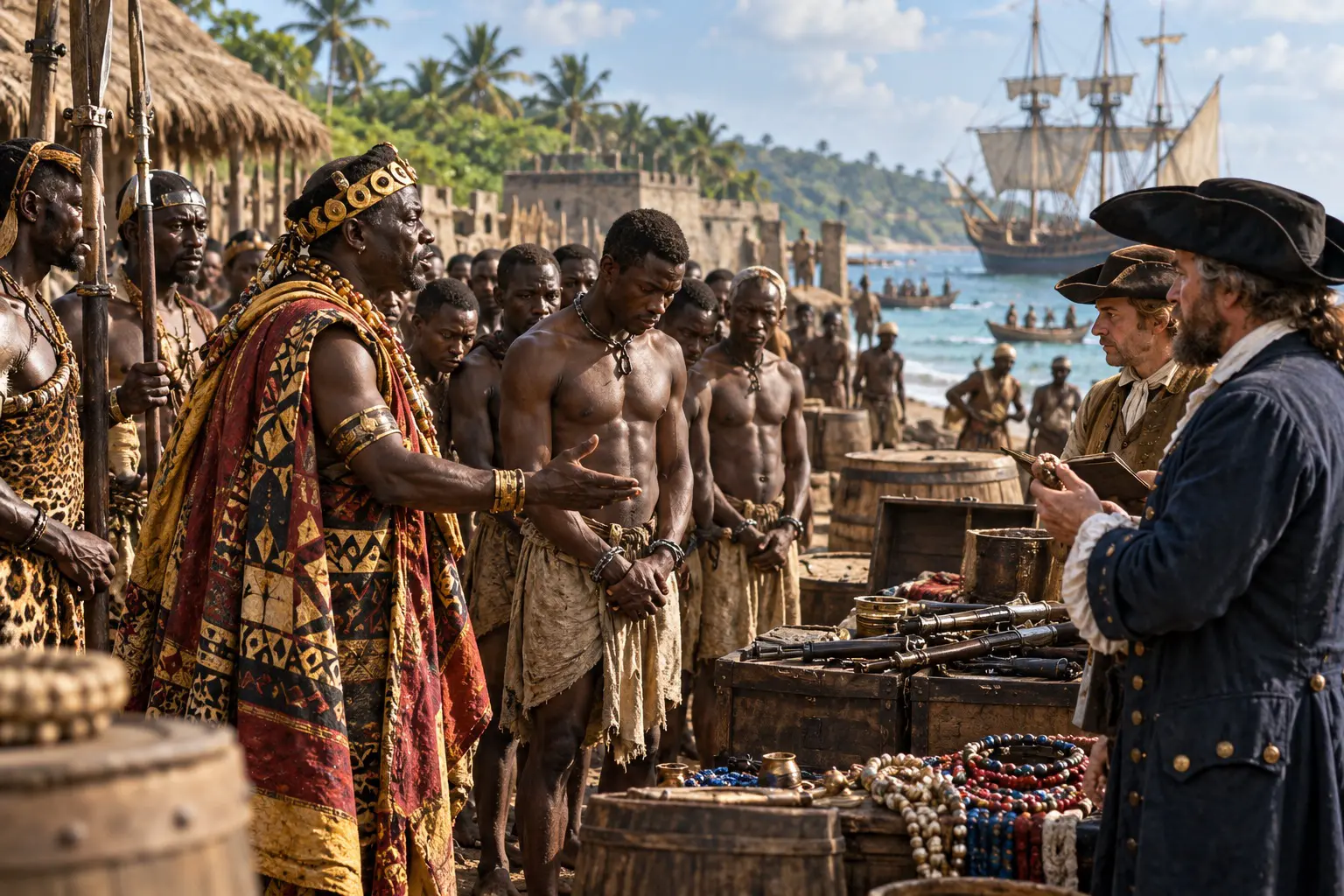
The great majority of the men, women, and children carried across the Atlantic were enslaved in Africa by other Africans and sold to European traders at the coast. Europeans rarely went inland. Tropical disease killed them quickly, and African states controlled access to the interior. Instead, European ships anchored off the coast or traded at forts and trading posts, and African merchants brought captives to them, often after marching them hundreds of miles in chains and selling them several times along the way.
How did those captives come to be enslaved in the first place? Historians point to a few main routes:
- Warfare. The most common source was war between African states and peoples. Prisoners taken in battle or in the sack of a town could be kept, ransomed, or sold. Many of the people who reached the Americas began as war captives.
- Raiding. As the Atlantic market grew, some wars stopped being about territory or politics and became expeditions to seize people for sale. Whole states came to organize their economies around raiding and selling captives.
- Kidnapping. Individuals, often children, were seized on roads, in fields, or from their homes by bands of kidnappers.
- Courts and debt. People convicted of crimes, or of offenses such as witchcraft, could be sentenced to enslavement and sale. So could people who fell into debt.
A few points are important for understanding this picture honestly.
First, these were not simply “tribes” fighting one another. West and West Central Africa held kingdoms, empires, and city-states with armies, courts, and trade networks, such as Dahomey, Asante, Oyo, and Kongo. Their wars were the wars of states.
Second, Africans generally enslaved people they saw as outsiders, not members of their own community or group. Slavery already existed in many African societies, but it was usually a different institution from the one that developed in the Americas. It was often not hereditary or permanent, and enslaved people could sometimes be absorbed into the households and families that held them.
Third, European demand changed everything. As the sugar, tobacco, rice, and cotton plantations of the Americas expanded, the demand for captives grew to a scale Africa had never seen. European traders paid for people with guns, gunpowder, cloth, iron, and alcohol. Guns made raiding more effective, and states that did not take part were left vulnerable to neighbors who did. Some rulers resisted. In the 1500s the king of Kongo wrote to the king of Portugal protesting that Portuguese traders were kidnapping his subjects and emptying his country. In the end, the market’s appetite for human beings fed wars, raids, and kidnappings across a vast region for more than three centuries.
In short, many of the people who arrived in the Carolinas had been taken as prisoners of war in Africa and sold to European slavers. That African participation was real, and historians do not dispute it. But the scale of the trade, and much of the violence that supplied it, was driven by what Europe and the Americas were willing to pay.
One Man's Story: Omar ibn Said
One North Carolinian left a firsthand account of that path. Omar ibn Said was born around 1770 in Futa Toro, an Islamic state along the Senegal River in what is now Senegal. He came from a well-to-do Muslim family and spent some twenty-five years in study, much of it of the Qur’an.
In 1807, when he was nearly forty, an invading army overran his country. He was captured, marched to the coast, sold to European slavers, and shipped to Charleston, South Carolina. He arrived just before the United States banned the importation of enslaved people from abroad. Put to work on a rice plantation under a cruel enslaver, he escaped and made his way north on foot to Fayetteville, North Carolina. There he was caught and jailed. He was then bought by James Owen of Bladen County, in the Cape Fear country, where he lived for the rest of his long life.
In 1831, Omar wrote a short autobiography in Arabic. It is believed to be the only autobiography written in Arabic by an enslaved person in the United States. He died around 1863 or 1864, still enslaved, and was buried in Bladen County. A state historical marker in Fayetteville now honors him.
Why So Few Ships Came Straight to North Carolina
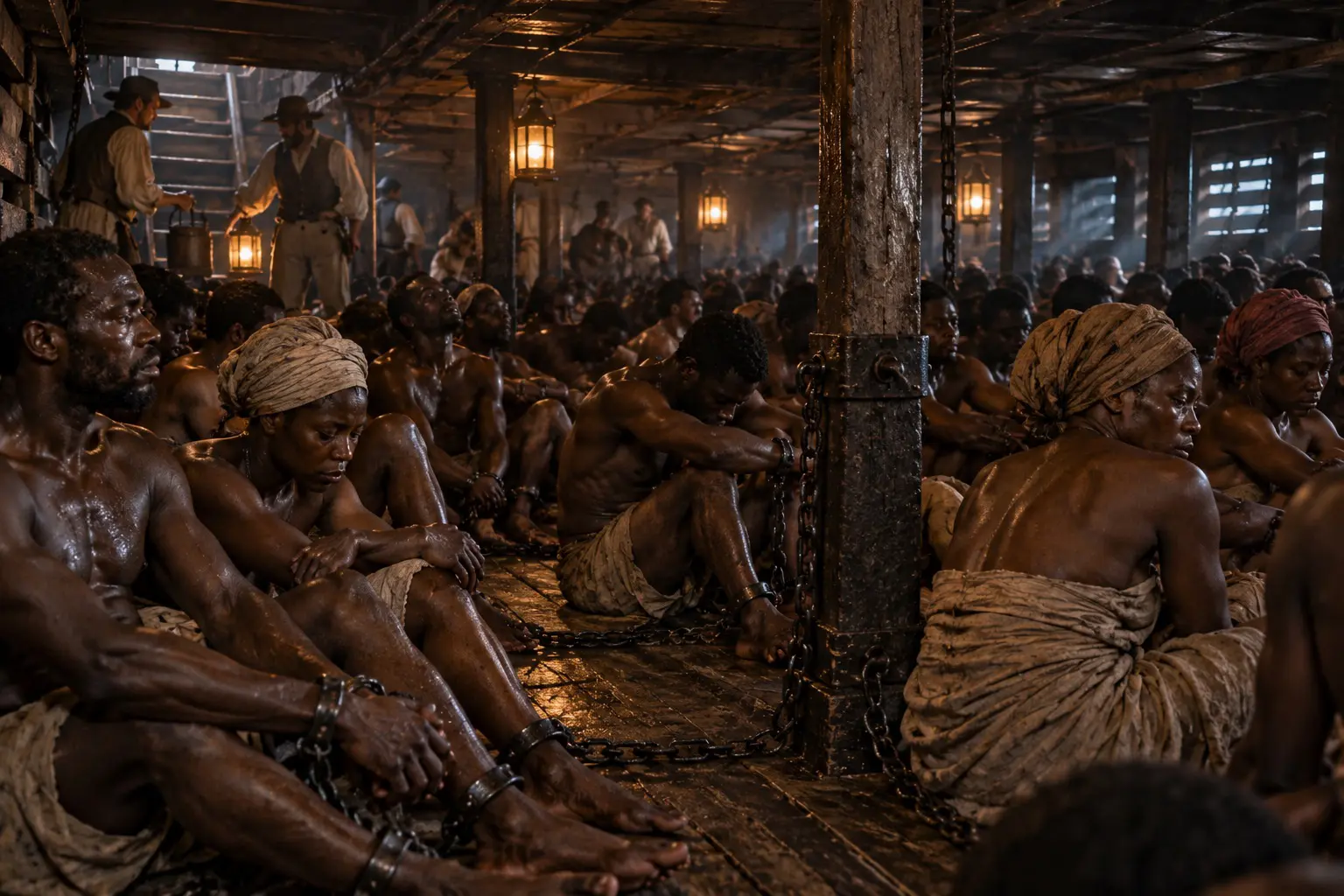
Omar’s route, from Africa to Charleston and only then to North Carolina, was typical. North Carolina’s coast was notoriously dangerous: shifting shoals, shallow inlets, and the Outer Banks kept large ocean-going ships away. As a result, most enslaved people in the colony were bought in Virginia or South Carolina and brought in overland or by inland waterways. Those who did arrive by sea mostly came from other mainland colonies or from the West Indies.
Direct voyages from Africa did happen, but they were few. Researchers working with the North Carolina African American Heritage Commission have documented about a dozen. Between 1759 and 1787, eleven voyages are known to have carried roughly 2,000 people directly from Africa to North Carolina ports. The busiest port of entry was Port Brunswick, on the lower Cape Fear just below Wilmington, near the region where On Free Ground is set.
The lower Cape Fear itself was settled in the 1720s by planters from South Carolina, who brought enslaved people with them to work rice fields and to make tar, pitch, and turpentine from the longleaf pines. The enslaved population of the colony grew quickly:
- about 800 in 1712
- about 6,000 in 1730
- about 41,000 in 1767
- 100,572 in the first federal census, in 1790, about one quarter of the state’s people
North Carolina tried several times to limit the trade from abroad. In 1774 the Provincial Congress at New Bern resolved not to import any more enslaved people. In 1786 the state banned importation again, but the measure was repealed in 1790. Federal law ended the legal importation of enslaved people into the United States in 1808, though smuggling went on for years afterward. North Carolina was still passing laws to deal with illegally imported Africans as late as 1816.
After that, North Carolina’s enslaved population grew mainly through births and through the domestic slave trade: the buying and selling of American-born people between plantations, counties, and states. By the time of the novel, that was the trade that loomed over every family at a place like Bellwether.
Native Americans in the Carolina Slave Trade
The first large slave trade in the Carolinas was not in Africans at all. It was in Native Americans.
From the founding of Charles Town (today’s Charleston) in 1670 until about 1720, Carolina’s economy rested heavily on trade with the Native nations of the Southeast: guns and other goods went out, and deerskins and captives came in. Native warriors raided rival peoples, seized prisoners, and sold them to English traders, who shipped most of them to the sugar islands of the Caribbean or to other colonies. Historians estimate that some 40,000 Native men, women, and children were exported from Charles Town between 1680 and 1720. In those early decades, Carolina sent out as many enslaved Native people as it brought in Africans, or more.
The pattern was much like the one in Africa. Native nations had taken captives in war long before Europeans arrived. Some captives were killed, some adopted into a clan, and some kept as servants with no kin and no rights. The European market turned those captives into a commodity and turned raiding into a business. Nations that raided gained guns, and nations without guns became targets.
The Cherokee took part in this trade. They raided other peoples for captives to exchange for English goods, and in 1714 Carolina traders persuaded Cherokee warriors to attack a Yuchi town for no reason except to take prisoners for sale. (Colonial officials, after hearing complaints, ordered the captives returned.) Cherokee men also fought in the army that South Carolina sent north in 1713 to crush the Tuscarora in North Carolina’s bloodiest colonial war. At the fall of the Tuscarora fort of Neoheroka, in what is now Greene County, about 950 people were killed or captured, and hundreds of the captives were taken back to South Carolina and sold into slavery.
The trade also ran the other way. Native people, the Cherokee among them, were themselves captured and enslaved by colonists and by rival nations. The Indian slave trade collapsed after the Yamasee War of 1715–1717, when a coalition of Native nations rose against the Carolina traders and their abuses. After that, colonists turned more and more to enslaved Africans.
The Cherokee as Slaveholders
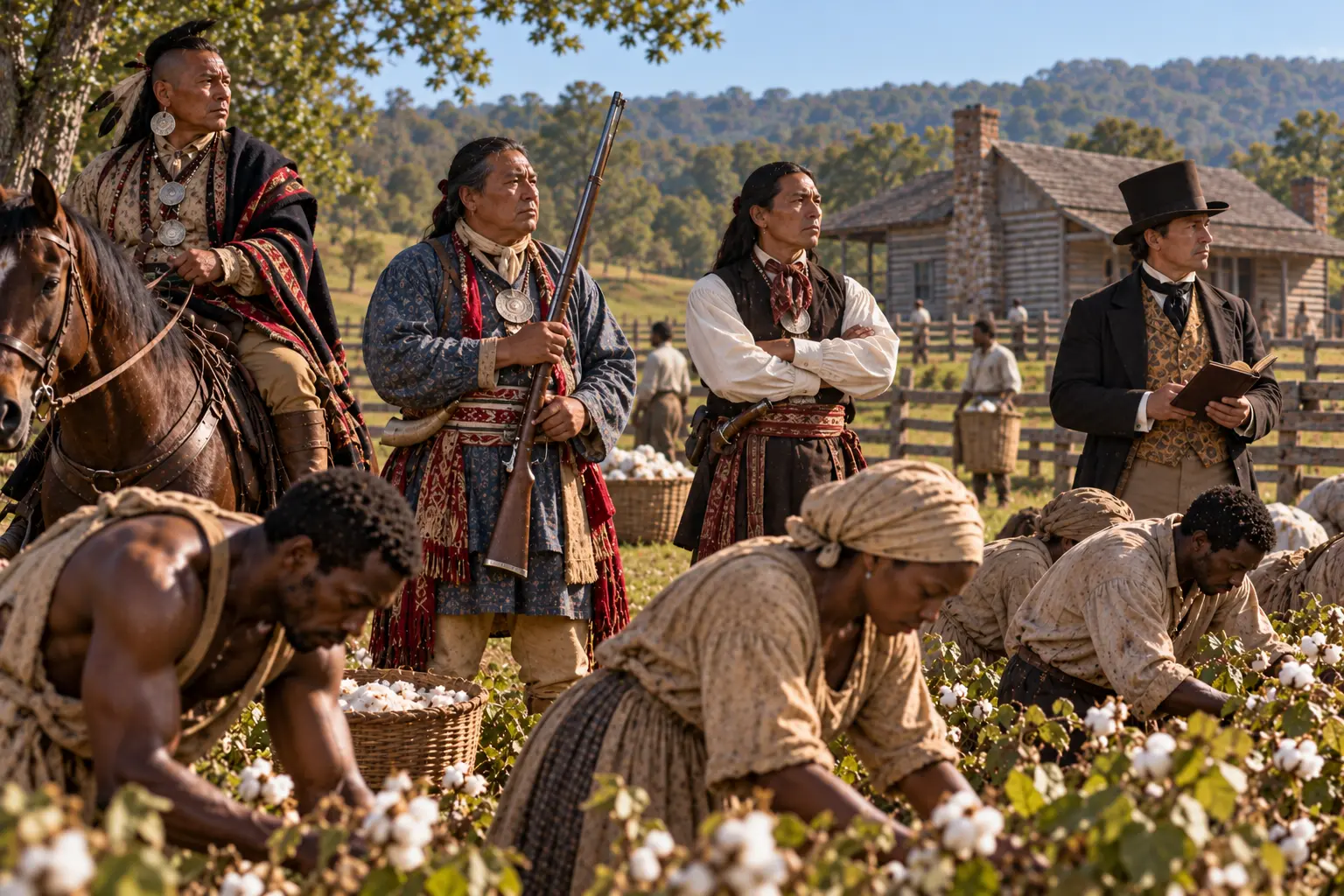
In the late 1700s and early 1800s, as the Cherokee lost their hunting lands and turned to farming, a growing number of Cherokee families began to hold enslaved Black people. Some had first come into Cherokee country as runaways or as captives taken from white settlements; under a 1730 treaty, the British even paid Cherokee men a gun and a coat for each fugitive they brought back. In time, Cherokee planters bought enslaved people outright, from white traders and from one another, and put them to work in fields, homes, mills, and ferries. Many of the largest slaveholders were the children of white traders who had married Cherokee women and left property, including people, to their heirs.
The numbers grew quickly. About 600 enslaved people lived in the Cherokee Nation in 1809. The 1835 census of the Cherokee living east of the Mississippi counted 1,592 enslaved people. Eleven of the twelve men who signed the Cherokee Nation’s 1827 constitution owned slaves, and Principal Chief John Ross himself held nineteen. Cherokee law came to look much like Southern state law: it barred marriage between Cherokees and enslaved people, forbade enslaved people to own property, and, after removal, made it illegal to teach Black people to read or write.
When the U.S. government forced the Cherokee west in 1838 and 1839 on the Trail of Tears, enslaved people were taken along with them, walking the same road. In the West, Cherokee slaveholders continued to buy and sell enslaved people among themselves, with other nations, and with white traders, and to hire them out and pledge them against debts. By 1860 the Cherokee Nation held several thousand enslaved people. Historians today reject the old idea that slavery under Native owners was gentler than slavery on white plantations; work, punishment, and the threat of sale were much the same.
North Carolina was a different case. Most Cherokee slaveholding was concentrated in Georgia, Tennessee, and Alabama. The 1835 census counted 3,644 Cherokees living in North Carolina, and among them only about 2.5 percent of households held slaves, owning 37 enslaved people in all. The mountain Cherokee around Quallatown, near the Oconaluftee River, whose descendants became the Eastern Band of Cherokee Indians, were among those who managed to remain in the state after removal. So the Cherokee did own, buy, and sell enslaved people, including in North Carolina, but in the North Carolina mountains it was rare, while in the Cherokee Nation as a whole it was a significant part of the economy.
The Cherokee Nation abolished slavery in 1863. Under an 1866 treaty with the United States, people it had enslaved, known as the Cherokee Freedmen, were promised Cherokee citizenship, a promise that has been fought over in courts for more than a century. The Cherokee Nation today has begun to reckon openly with this history.
By Bellwether's Time
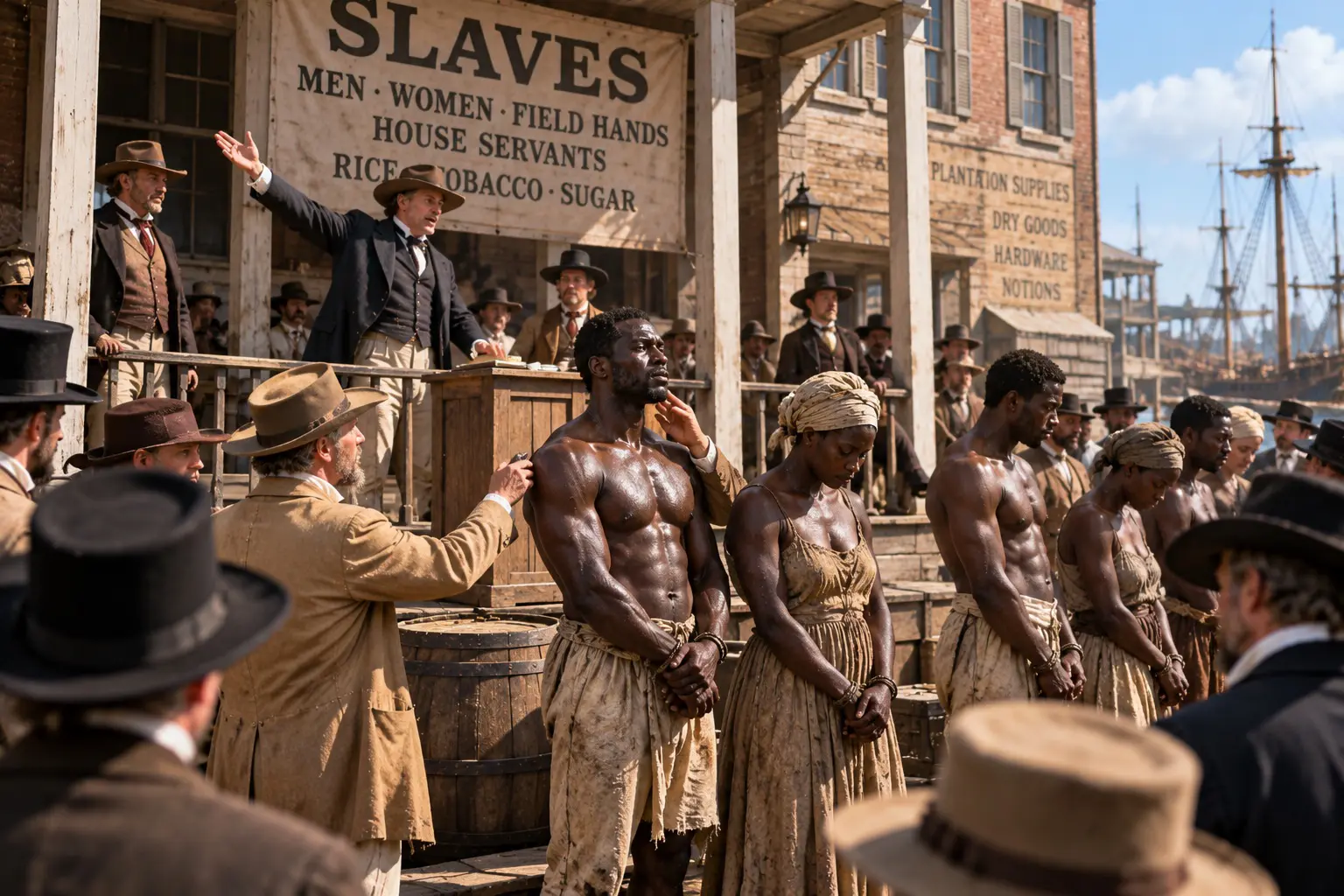
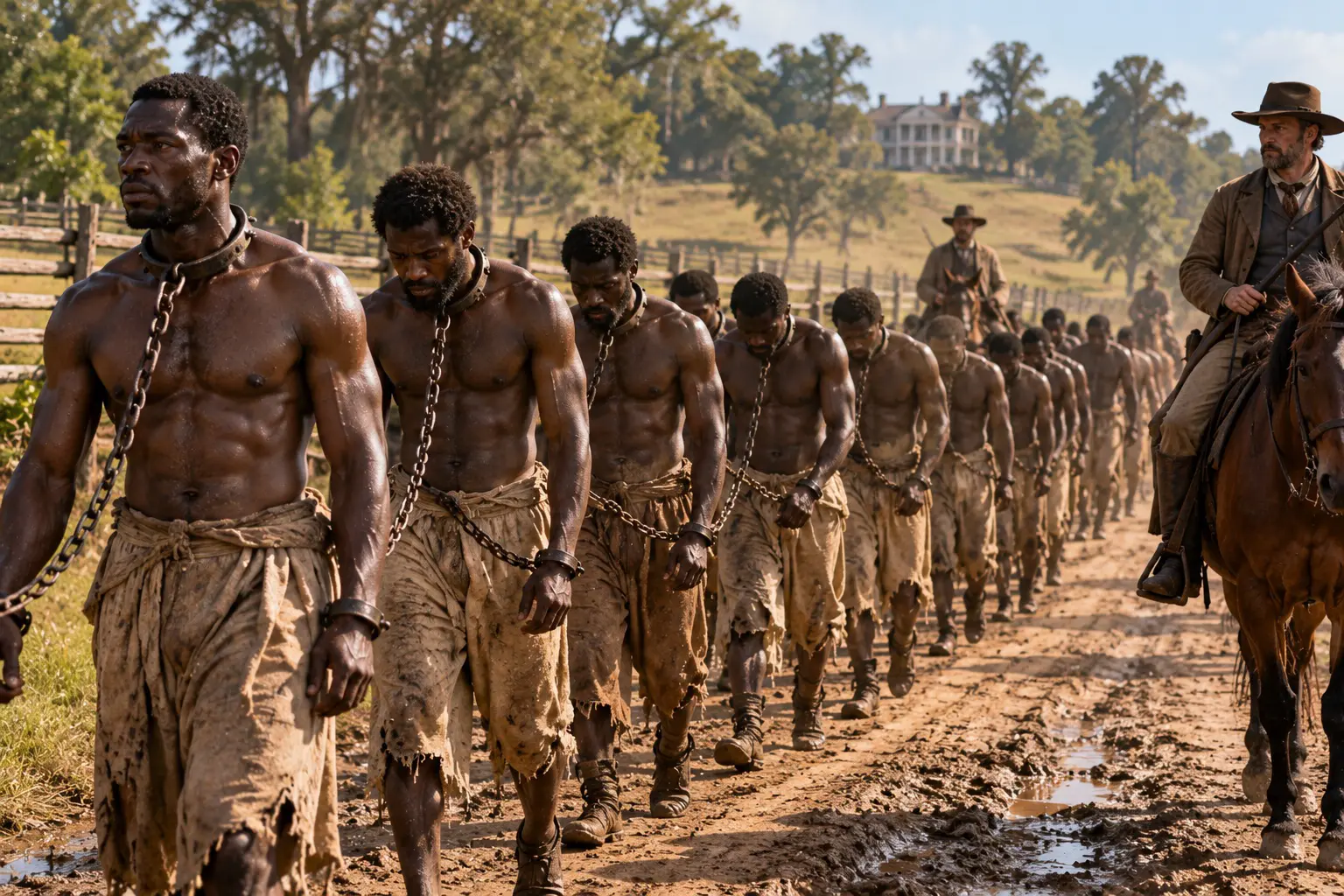
By the years of On Free Ground, 1839 to 1855, the Atlantic crossing lay generations in the past for most enslaved North Carolinians. What they faced instead was the domestic trade: the yard in Wilmington, the estate sale, the auction in a town square, the planter from the next county who could buy a child away from a mother on a Tuesday. The novel’s characters live inside that system. But it was built on what came first: wars and raids in Africa, a market across the ocean that paid for people with guns and cloth, a dangerous coast that sent most captives in by way of Virginia and Charleston, and a Native slave trade that had already taught the Carolinas how to turn human beings into goods.
Sources and further reading
- Africa to Carolina, North Carolina African American Heritage Commission
- Slavery and Life Under Slavery, NCpedia
- Omar Ibn Said, NCpedia, and Omar ibn Said historical marker, N.C. Department of Natural and Cultural Resources
- Capture and Enslavement, Understanding Slavery Initiative
- Nooherooka and the Tuscarora War, NCpedia
- Bernard Vincent, “Slaveholding Indians: the Case of the Cherokee Nation”, drawing on Theda Perdue, Slavery and the Evolution of Cherokee Society, 1540–1866 (1979), and R. Halliburton Jr., Red over Black (1977)
- The James Poyas Daybook: historical context, College of Charleston
- Cherokee Nation examines history of enslavement, KRMG, February 2026