Greg McDonald
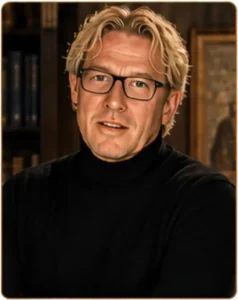
Greg McDonald is a storyteller at heart. His passion for history, human connection, and the resilience of the human spirit fuels his writing. On Free Ground is his debut novel.
Greg enjoys hiking, cooking, cinema, and reading many genres.
Greg lives in the Pacific Northwest with his menagerie.
A Conversation with Greg McDonald
What is On Free Ground about?
At its heart, it’s a story about freedom. But from the beginning, I was interested in a question more complicated than whether a person is free or enslaved: What does it mean to be free when the world has already decided who you are allowed to be?
The novel deals with slavery, sexuality, and education. Why those three subjects?
At first glance, they may seem very different. In the lives of Liam and Isaac, however, they are inseparable. Each one asks a version of the same question.
Slavery asks: Who owns your life?
Sexuality asks: Who determines whom you may love?
Education asks: Who gets to decide what you are allowed to know—and therefore what you are capable of imagining for yourself?
For Liam and Isaac, those questions cannot be separated. That intersection is the heart of the novel.
Who are the main characters?
Isaac is born into a society that regards him not simply as inferior, but as property. His labor can be commanded, his movements restricted, his family separated, and his future determined by someone else. Even the most intimate decisions of his life exist under the authority of others.
Liam is born on the opposite side of that system. He inherits privileges Isaac is denied and grows up surrounded by assumptions about race, class, ownership, and duty that he has been taught to regard as natural.
Yet privilege does not make Liam entirely free.
How does the relationship between the two boys change?
Their friendship begins in childhood, before either boy fully understands the machinery of the world around them. As they grow older, the affection between them deepens into something neither was taught to expect—or permitted to acknowledge.
Nineteenth-century America had rigid expectations not only about race and social position, but about masculinity, marriage, desire, and the kinds of love that could be spoken aloud.
Growing older means discovering that the world has names, laws, customs, expectations, and punishments for things that once seemed simple. It means discovering that affection can be complicated by power, that knowledge can be dangerous, and that freedom is not something granted equally—or sometimes granted at all.
Is their relationship an equal one?
No, and that is one of its central tensions. Liam belongs to the class of people empowered to own Isaac, while Isaac can never be certain where affection ends and power begins.
At the same time, both must discover what their feelings mean in a society that gives them neither the language nor the permission to define those feelings for themselves.
Why is education so important in the story?
In On Free Ground, education is more than a pathway to advancement. It is a pathway to self-determination.
To read is to gain access to ideas someone else might prefer you never encounter. To write is to give permanence to your own thoughts. To understand history, philosophy, religion, and law is to begin asking whether the rules governing your life are inevitable, or merely rules created by other human beings.
For an enslaved person, literacy could be profoundly threatening to the institution of slavery. Knowledge opened doors that bondage depended upon keeping closed.
Does education change Liam too?
Very much so. The more he learns, the harder it becomes for him simply to accept the world he inherited. Education forces him to examine his assumptions about ownership, race, morality, and eventually himself.
What begins as the acquisition of knowledge becomes something more dangerous: the development of conscience.
For Isaac, knowledge offers another possibility—the ability to imagine a life beyond the one assigned to him.
And imagination is where freedom often begins.
Is reaching free soil the end of the story?
Not at all. The novel is also about discovering that legal freedom and personal freedom are not the same thing.
A document can declare a man free. A border can place him on free soil. A law can recognize rights previously denied him. Those things matter enormously. But none of them can instantly erase the habits, fears, prejudices, obligations, and inequalities created by a lifetime within another system.
Nor can freedom simply be bestowed by one person upon another and considered complete.
Ultimately, Isaac must become the author of his own life. Liam must decide which parts of the world he inherited he is willing to reject. And both must determine whether the bond that began between them as boys can become something freely chosen between men.
How did you approach the language and identities of the period?
I did not want to impose twenty-first-century identities or language on people living in the nineteenth century. Liam and Isaac understand themselves through the vocabulary, beliefs, silences, and limitations of their own time.
But the human questions they confront are not confined to that century:
Who am I?
Who has the right to decide?
Whom may I love?
What do I owe another person?
And what must I risk to live a life that is truly my own?
Those questions connect slavery, sexuality, and education throughout this story.
Where does the title come from?
Those same questions lead to it. It is one thing to reach free ground. It is another to learn how to stand upon it.
Where can readers learn more or get in touch?
If you’d like to learn more about the dark history of slavery in America and the lives of people during that time, the book’s website, OnFreeGround.com, has more.
I also welcome emails with questions and comments at greg@gregmcdonald.me.